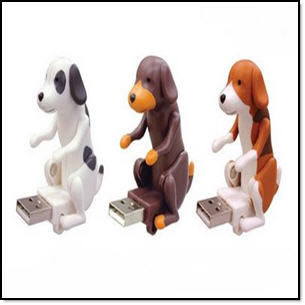
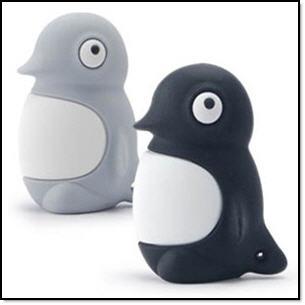
Active Media Products just released the perfect gift for Linux nerds young and old.
The actual product wasn't made with Linux users in mind. Active Media teamed up with the WWF ( World Wildlife Fund) to make a bunch of USB drives themed after endangered animals. A portion of the proceeds from sales will go to the WWF to help stop cute animals such as Penguin from dying out.
There are four different versions of the Penguin USB drive available; 2GB, 4GB, 8GB, and 16GB versions. The 8GB version will retail for around $26 dollars, and all versions are available right now from Amazon.com and other retailers.
Open source has become big business, suggests an article in the Investors Business Daily, but it has done so by becoming more like the proprietary-software world it purports to leave behind.
The article cites recent research from IDC indicating that CIOs allocated up to 24 percent of their budgets to open-source software in 2008, up from 10 percent in 2007--a finding that jibes with recent data from Forrester. This open-source growth is propelling Red Hat to grow "at two to three times the rate of the broader software industry over a multiyear horizon," according to research from Piper Jaffray.
Google is funding work to ensure the Windows version of Adobe Systems' Photoshop and other Creative Suite software can run on Linux computers.
For the project, Google is funding programmers at CodeWeavers, a company whose open-source Wine software lets Windows software run on Linux. Wine is a compatibility layer that intercepts a program's Windows commands and converts them to instructions for the Linux kernel and its graphics subsystem.
"We hired CodeWeavers to make Photoshop CS and CS2 work better under Wine," Dan Kegel, of Google's software engineering team and the Wine 1.0 release manager, said on Google's open-source blog. "Photoshop is one of those applications that desktop Linux users are constantly clamoring for, and we're happy to say they work pretty well now...We look forward to further improvements in this area."
Google already uses Wine for the Linux version of its Picasa software for editing, tagging, and uploading photos. Photoshop is a larger and more complicated package, however, not to mention updated to version CS3 for nearly a year, so it's likely the CodeWeavers programmers will have a lot of work on their hands.
A survey by desktop Linux advocate Novell found Photoshop is the top non-Linux application that Linux users would like to have. Although Adobe has dipped its toes into the desktop Linux waters, so far it hasn't made any major moves.
And with current technology trends, maybe Adobe never will see the need for Linux ports. With virtualization software from companies such as Parallels and VMware and improving support from chipmakers Advanced Micro Devices and Intel, it's getting easier to run multiple operating systems on the same computer.
The player speaks of its status. The new i-pod shuffle is all equipped with VoiceOver,2 the feature that gives iPod shuffle a voice. With the press of a button, it tells you what song is playing and who’s performing it. It can even tell you the names of your playlists, giving you a new way to navigate your music.
WASHINGTON - SOFTWARE developer Oracle has reached a US$5.6 billion(S$8.4 billion) deal to purchase Sun Microsystems, the two companies announced Monday in a joint communique.
'The acquisition of Sun transforms the IT industry, combining best-in-class enterprise software and mission-critical computing systems,' Oracle's chief executive Larry Ellison said in the statement.
'Oracle will be the only company that can engineer an integrated system - applications to disk - where all the pieces fit and work together so customers do not have to do it themselves,' he said.
'Our customers benefit as their systems integration costs go down while system performance, reliability and security go up.'
Sun chairman Scott McNealy hailed the merger as 'an industry-defining event.'
Company officials said Sun's board of directors have unanimously sanctioned the deal which is expected to close this summer pending approval from the company's stockholders and federal regulators.
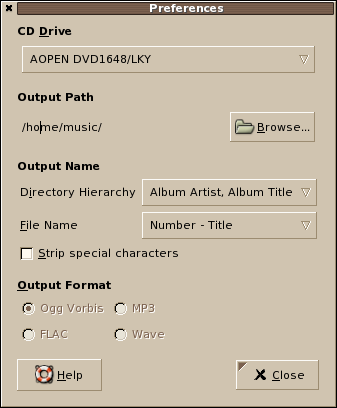
Read the track artist instead of album artist in Musicbrain3
Don't crash if the release date is unknown
Read tracks when falling back to gvfs
Finally, a call for someone with deep LAME knowledge. The GStreamer LAME element is, well, lame because it sets a number of properties to default values that make it very difficult for LAME to work well. Someone who understands how all of the LAME settings operate needs to sit down, vet the settings and remove the pointless ones, unset most of the rest, leaving the 'preset' setting as the only one which has a default value. At the moment there are many contradictory default settings which mean LAME produces rather badly encoded files. Any takers?
More and more IT Vendors are validating the benefits of desktop and server virtualization, from energy efficiency to better resource utilization. But if you’re still leery of forking over big dollars for the technology, there are some low-cost and no-cost ways to give virtualization a try.
Virtualization freebies are available both from the open source community and from vendors such as Microsoft and VMware. Here’s a sampling:
A virtualization environment for Windows Server 2003, Windows Server 2003 Service Pack 1, Windows XP Professional Edition and Windows XP Service Pack 2. It works on x86 servers or workstations and is available in 32- or 64-bit versions.
Linux-based software that lets the IT administrator create secure virtual environments. Each virtual private server can be rebooted independently, co-existing with other virtual private servers.
The open source project is supported by SWsoft, which markets a commercial version called Virtuozzo.
Open source software for running Windows or Linux on a Macintosh. It allows users to switch between guest PCs and restart guest PCs at any point. Q also enables users to exchange files between the host operating system and the guest.
Q is based on the QEMU open source CPU emulator. You need to be careful about using Q – according to the Web site, it is still alpha software.
A generic and open source machine emulator and virtualization software developed by Fabrice Bellard, the author of a compact C compiler. QEMU can run operating systems and programs developed for one machine on a different machine.
When used as virtualization software, the host and guest machine must use x86-compatible processors. In emulation mode, it supports x86 PFCs, MIPS R4000, Sun SPARC and PowerPC processors.
Technical Architecture Solutions, a disaster recovery and business continuity consultancy, is offering a TCO Calculator for server virtualization. It is Web-based and allows IT administrators to estimate how much money they will save by using VMware ESX. The calculator consists of a Microsoft Excel spreadsheet and is based on four virtual machines per virtual server.
VMware Server is VMware’s starter kit for Windows and Linux server virtualization. It can host Windows, Linux, NetWare and Solaris as guest operating systems.
VMware Player lets IT administrators run virtual machine instances created by other VMware products. With it, you can download prebuilt virtual machines from the VMware Technology Network or share them with other organizations.
Virtual Iron’s Single Server Virtualization and Management software creates Linux or Windows virtual servers. It runs in 32- and 64-bit workloads that are stored on iSCSI, storage-area networks or local storage. Virtualized nodes created with Virtual Iron’s Single Server software must have Intel Virtualization Technology or AMD Virtualization hardware assist.
An alternative to terminal services environments and fat-client desktop implementations. It lets an IT administrator host five individual Windows desktop PCs inside virtual machines running on servers in the data center.
This open source package for x86 server virtualization was developed by the University of Cambridge and commercialized by XenSource. Xen, which runs on Linux, supports Windows and Linux as guest operating systems.
XenExpress, from XenSource, is a free virtualization package for x86 servers that lets IT administrators host as many as four virtual machines on servers equipped with 4GB of physical RAM or two physical sockets.
It supports Windows Server 2003, Windows XP and Windows 2000 as guest operating systems. It also supports Red Hat, SUSE and Debian Linux guest operating systems.
XenExpress is based on the open source Xen hypervisor.
Memory leaks and code exploits are a fact of life for both browser developers and their users — regardless of the specific browser in question. For the developers at Mozilla, both issues have been on their minds this week, as browser bugs of both sorts have been all over the news.
Perhaps because it's the second most-widely-used web browser in the world, not to mention being Open Source — and because expectations for the "market-leading" browser aren't particularly high — Firefox takes a good bit of flak whenever a new security hole or resource sink is discovered. The Mozilla devs — or, at least some of them — intended this week to be about memory management, and Mozilla's Co-Director of Developer Tools, Ben Galbraith, got the ball rolling on Monday with a blog post laying out plans for a new tool intended to make the process known as "garbage collection" — freeing up resources by clearing out objects no longer required in memory — a more transparent and manageable process.
According to Galbraith, the tool being proposed would make it possible to view current unrecoverable JavaScript objects, known as "the heap," along with the ability to determine why they are "noncollectable," as well as providing the opportunity to understand when collection starts and finishes, and by extension, how long it is taking. His blog post ended by encouraging members of the Mozilla community to step up and offer feedback on the proposal, something they likely were doing through Wednesday, when everyone's attention was redirected by a critical security glitch that apparently threatens every Firefox 3 user, regardless of platform.
Security researchers published code on Wednesday that reportedly would allow an attacker to load unauthorized software on a target's computer simply by having the target view a specially-coded XML file. According to reports, Mozilla developers were blindsided by the bug and immediately raced to find a patch, a task they'd completed by this morning, adding it to next-week's Firefox 3.0.8 release. Because of the exploit, that release is now considered a "high-priority fire-drill security update" for all users.
Mandriva, the leading European Linux publisher, on 26th March announced the launch of the Mandriva Flash 2009, the new product in the popular Mandriva Flash family. It will enable you to take your entire desktop with you wherever you go.
Mandriva Flash 2009 8 GB, comes in a white casing and includes the feature which makes Mandriva Flash so unique - it can be installed onto your desktop in just a few clicks.
Plug in the USB key, turn the PC on and in just a few seconds the Mandriva Linux 2009 operating system is ready for office work, to listen to music or surf the web. Mandriva Flash 2009 is a fully operational system requiring no installation and which fits into a pocket.
Mandriva Flash 2009 offers 8 GB of space which you can organise as you like, prioritising space for applications or for your documents.
Mandriva Flash is a complete work station based on advanced technologies. You will find the 3D desktop system of Mandriva Linux as well as the following software for Linux:
Mozilla Firefox, the web navigator which allows you to surf in complete security unhindered by unwelcome pop-ups,
Mozilla Thunderbird makes e-mailing safer, faster and easier with the most effective spam filter on the market,
Ezboot makes it fast and easy to boot into Mandriva Flash from Windows,
KDE 4, the most advanced, attractive and efficient Linux desktop,
Codeina gives easy access to the most widely-used audio and video formats,
Java and Flash help you see Web content,
Skype lets you make phone calls over the Internet,
Google Toolbar makes searching easier,
OpenOffice.org gives you office applications for your text documents, tables, and presentations - compatible with the most widely used office suites.
This new version of Mandriva Flash 2009 comes with a migration tool enabling you to import Windows settings and documents.
Price and availability
Mandriva Flash 2009 is available in several languages. The new model of 8 GB is available now at the price of only 44 € or $55 (US) and can be found in the Mandriva Store.
About Mandriva
Mandriva, formerly known as Mandrakesoft, is the publisher of Mandriva Linux, an easy-to-use and innovative operating system. It is one of the most popular Linux editions in the world. Dedicated to making open source technologies accessible to all users, the company offers a full range of products and services to individuals, enterprises and government organizations. Mandriva products are available online in 80 languages and in more than 140 countries through dedicated channels. Headquartered in Paris, France, the company is publicly traded on the Euronext Marché Libre. More information at mandriva.com.
The Fedora Project has released a beta version of its community-sponsored, Red Hat-based Linux distribution, with the final due in May. The Fedora 11 beta release offers faster, 20-second bootups, improved package management, new virtualization features, and support for cross-compiling Windows applications, says the open-source project.
Similar, but not identical to, the subscription-based Red Hat Enterprise Linux (RHEL), Fedora is billed as being "free for anyone to use, modify, and distribute." Fedora was recently claimed by the project to have about 10 million users, which would make it the world's largest Linux distribution. Fedora 10, which shipped last November to generally positive reviews, was notable for vastly improving its NetworkManager application.
The improved PackageKit offers new popups when trying to open a document with uninstalled fonts
The new Fedora 11 release, codenamed "Leonidas," has "a feature list that dwarfs any previous release," says the project. Key improvements are said to include:
Faster bootup (as fast as 20 seconds, down from 30 seconds) using kernel mode setting (KMS), and refinements involving NVidia, ATI, and Intel video adapters
Use of the new EXT4 filesystem as the default
Enhancements to the PackageKit cross-distribution package manager, including on-demand font and file support (see image above)
Virtualization features including a new management console with enhanced mouse support and larger screen real estate, integration of SELinux for guest virtual machines, access to PCI bus devices from guests, and authentication for VNC remote access
Support for cross-compiling Windows applications directly on Fedora using the MinGW environment
Additional new features are said to include a new "Archer" Gdb development branch for C++ and Python, an automatic bug-reporting tool, and improved support for fingerprint readers. Application updates include Gnome 2.26, KDE 4.2, Xfce 4.6, GCC 4.4, NetBeans IDE 6.5, Python 2.6, Thunderbird 3, and Firefox 3.1.
According to the project, the Fedora 11 alpha release has generated over 40,000 downloads in a little over a month. The beta release is said to be supported with Live images for writing to optical disks or USB keys.
Availability
The Fedora 11 beta release is available now for free download, says the Fedora Project, which expects to ship the final in May. The feature list may be found here, and the download page should be here.
The RadioTux team will include a summary of Official OpenSUSE Weekly News in their German-speaking podcast “Radiotux@HoRads”. It’s planned to make this a fixed part of the shows. Air date will be 27th March onwards between 18:00 CET and 19:30 CET. So here are the links
Well when it comes to user friendly Linux first thing which comes to my mind is Ubuntu. I have been following Ubuntu religiously since the start of my career.
There are plenty of features which makes it stand apart from its Cousins which includes a large community backing up to provide every possible application operative on this debian platform, further to that deployment of these are also pretty easy, thanks to Aptitude and Synaptic . I have been running it successfully on HP and Dell laptops in my office, with Wi-LAN working like a charm, which is a bit of screwy when it comes to distributions other than Ubuntu.


 The Fedora Project has released a beta version of its community-sponsored, Red Hat-based Linux distribution, with the final due in May. The Fedora 11 beta release offers faster, 20-second bootups, improved package management, new virtualization features, and support for cross-compiling Windows applications, says the open-source project.


 Posts
Posts